
Wie lässt sich die Einhaltung der IP-Schutzart bei der Fertigung kundenspezifischer Metallgehäuse sicherstellen?
Sicherstellung der Einhaltung der IP-Schutzarten innerhalb Blechbearbeitungsdienstleistungen Der Prozess beginnt mit der eindeutigen Festlegung des erforderlichen IP-Schutzniveaus. Ingenieure müssen Umwelteinflüsse berücksichtigen, die den IP-Schutz beeinflussen. Jede Phase, von der Konstruktion bis zur Materialauswahl, erfordert die sorgfältige Integration der IP-Spezifikationen. Dichtungsmethoden und Fertigungsverfahren wirken sich auf die Wirksamkeit des IP-Schutzes aus. Prüfungen bestätigen die Einhaltung der IP-Standards und verhindern kostspielige Ausfälle. Branchennormen dienen als Grundlage für die IP-Bewertung und helfen, Risiken durch Nichteinhaltung zu vermeiden. Ein schrittweiser Prozess gewährleistet zuverlässigen IP-Schutz für jedes Gehäuse.
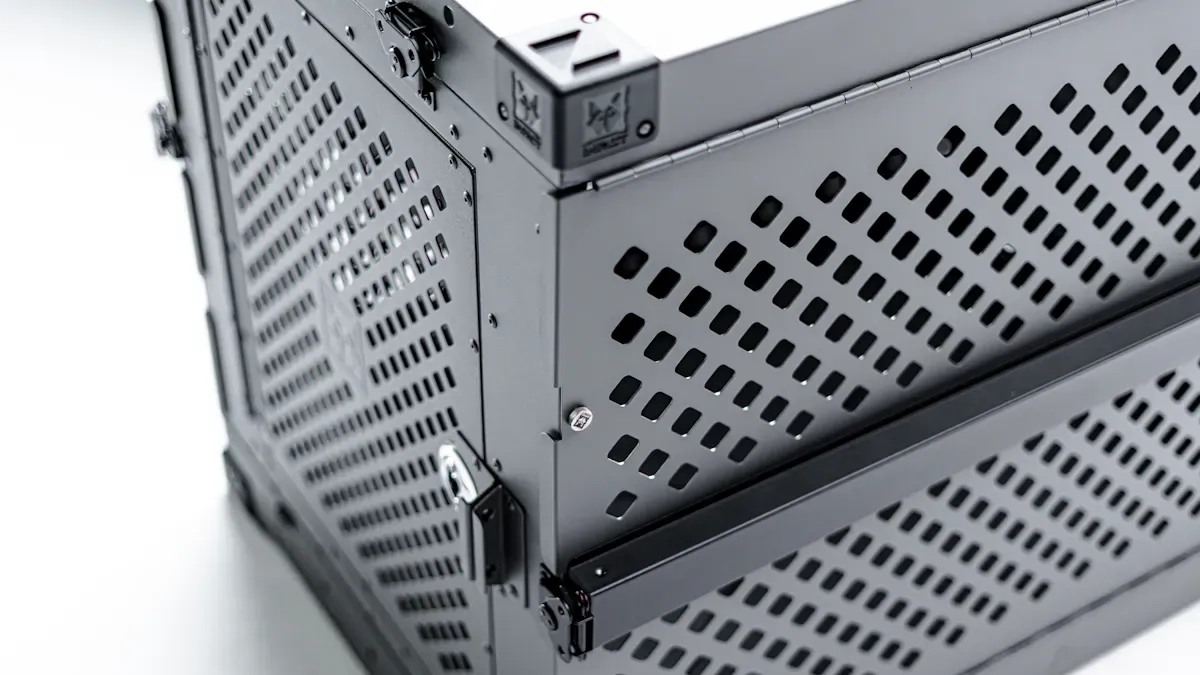
Ermitteln Sie frühzeitig im Konstruktionsprozess die erforderliche IP-Schutzart, um einen angemessenen Schutz gegen Staub und Wasser zu gewährleisten.
Wählen Sie geeignete Materialien und Dichtungsmethoden, um die Langlebigkeit des Gehäuses und die Einhaltung der IP-Normen zu verbessern.
Führen Sie gründliche Tests durch, einschließlich Staub- und Wasserdichtheitsprüfungen, um sicherzustellen, dass die Gehäuse die vorgegebenen IP-Schutzarten erfüllen.
Bei der Fertigung sollten die Branchenstandards und bewährten Verfahren eingehalten werden, um häufige Fehler zu vermeiden, die die Wahrung des geistigen Eigentums gefährden können.
Dokumentieren Sie alle Test- und Zertifizierungsprozesse, um den Nachweis der Konformität zu erbringen und Vertrauen bei den Kunden aufzubauen.
Der IP-Code ist ein weltweit einheitliches System zur Klassifizierung des Schutzgrades elektrischer Gehäuse. Dieses System, definiert von der Internationalen Elektrotechnischen Kommission (IEC) gemäß der Norm IEC 60529, verwendet eine einfache Struktur. Der Code beginnt mit den Buchstaben IP, gefolgt von zwei Ziffern. Die erste Ziffer gibt an, wie gut das Gehäuse vor festen Fremdkörpern wie Staub schützt. Die zweite Ziffer bezeichnet den Schutzgrad gegen Wasser.
Die folgende Tabelle veranschaulicht die Struktur des IP-Codes:
Komponente | Beschreibung |
|---|---|
Standardtitel | Schutzarten von Gehäusen (IP-Code) |
Organisation | Internationale Elektrotechnische Kommission (IEC) |
Zweck | Klassifiziert die Dichtigkeit von Gehäusen gegenüber festen Gegenständen und Feuchtigkeit |
Code-Format | 'IP' gefolgt von zwei Ziffern: die erste für das Eindringen von Feststoffpartikeln, die zweite für das Eindringen von Wasser. |
Schutzstufen | Erste Ziffer (0-6) für festen Schutz, zweite Ziffer (0-9) für Wasserschutz |
Die IP-Schutzart gibt Aufschluss über die Fähigkeit des Gehäuses, Staub und Wasser abzuhalten. Beispielsweise bietet ein IP66-Gehäuse vollständigen Schutz gegen Staub und starke Strahlwasserstrahlen. Die erste Ziffer reicht von 0 bis 6, die zweite von 0 bis 9. Diese Struktur hilft Anwendern, das passende Gehäuse für ihre Bedürfnisse auszuwählen.
IP-Schutzarten spielen eine entscheidende Rolle für die Sicherheit und Langlebigkeit von Metallgehäusen. Sie helfen Ingenieuren und Herstellern, Gehäuse an die Anforderungen verschiedener Umgebungen anzupassen. Die erste Ziffer der IP-Schutzart gibt den Schutzgrad gegen feste Partikel an, die zweite Ziffer den Schutzgrad gegen Flüssigkeiten. So können Anwender die Leistungsfähigkeit eines Gehäuses unter rauen Bedingungen beurteilen.
Industrienormen erfordern die strikte Einhaltung der IP-Schutzarten. Normen von Organisationen wie der IEC definieren die Mindestanforderungen an Staub- und Wasserdichtigkeit für verschiedene Anwendungen. Sie legen außerdem die Anforderungen an die Korrosionsbeständigkeit fest und unterscheiden zwischen Innen- und Außeneinsatz. Die Nichteinhaltung der korrekten IP-Schutzart kann zu Problemen wie Kondensation, Korrosion oder sogar Geräteausfällen führen. Durch die Einhaltung dieser Normen stellen Hersteller sicher, dass ihre Gehäuse zuverlässigen Schutz bieten und die Bedürfnisse ihrer Kunden erfüllen.
Ingenieure müssen die Umgebungsbedingungen und die Anwendung bewerten, bevor sie die passende IP-Schutzart für die Fertigung von Metallgehäusen auswählen. Jede Umgebung birgt spezifische Herausforderungen, die den erforderlichen Schutzgrad beeinflussen. Die folgende Tabelle hebt die Umgebungsfaktoren hervor, die den Auswahlprozess beeinflussen:
Umweltfaktor | Auswirkungen auf die IP-Bewertung |
|---|---|
Temperaturschwankungen | Möglicherweise sind Gehäuse erforderlich, die extremen Bedingungen standhalten. |
Luftfeuchtigkeitswerte | Höhere Luftfeuchtigkeit kann eine bessere Abdichtung erforderlich machen. |
Exposition gegenüber Chemikalien | Bestimmte Chemikalien können Materialien zersetzen, weshalb ein höherer Schutz erforderlich ist. |
Physikalische Auswirkungen | Gehäuse in stark beanspruchten Bereichen benötigen einen robusten Schutz. |
Außenaufnahmen | Für Witterungsbeständigkeit sind in der Regel höhere IP-Schutzarten erforderlich. |
Anwendungsspezifische Anforderungen spielen ebenfalls eine wichtige Rolle bei der Bestimmung der minimalen IP-Schutzart. Ingenieure sollten verschiedene Aspekte berücksichtigen:
Bewertung der Belastung durch Partikel, wie z. B. Baustaub und industrielle Schadstoffe.
Verständnis der Flüssigkeitskontaktmuster, einschließlich intermittierendem Spritzen und direktem Eintauchen.
Unter Berücksichtigung der Betriebstemperaturbereiche, von Umgebungen unter Null Grad bis hin zu Umgebungen mit hohen Temperaturen.
Beurteilung von Druckschwankungen, einschließlich Höhenänderungen und Einwirkung von Hochdruckreinigung.
Außenbereiche sind oft raueren Bedingungen ausgesetzt als Innenbereiche. Die folgende Tabelle vergleicht die Anforderungen für Innen- und Außenbereiche:
Aspekt | Innenschaltanlagen | Freiluft-Schaltanlagen |
|---|---|---|
Umwelteinflüsse | Nur indirekte Exposition | Kontinuierliche direkte Exposition |
Anforderungen an den Staubschutz | Zementstaub, Metallpartikel, Textilfasern | Sand, Erde, Schadstoffpartikel |
Risiko des Wassereintritts | Versehentliches Verspritzen, Kondensation | Starkregen, vom Wind getriebenes Wasser, Schnee und Eis |
Industrienormen dienen als Leitfaden für die Auswahl der richtigen IP-Schutzart für die Fertigung von Metallgehäusen. Diese Normen definieren die Mindestschutzgrade gegen das Eindringen von Feststoffen und Flüssigkeiten. Die folgende Tabelle veranschaulicht, wie unterschiedliche IP-Schutzarten unterschiedliche Grade des Schutzes gegen das Eindringen von Feststoffen und Flüssigkeiten bieten:
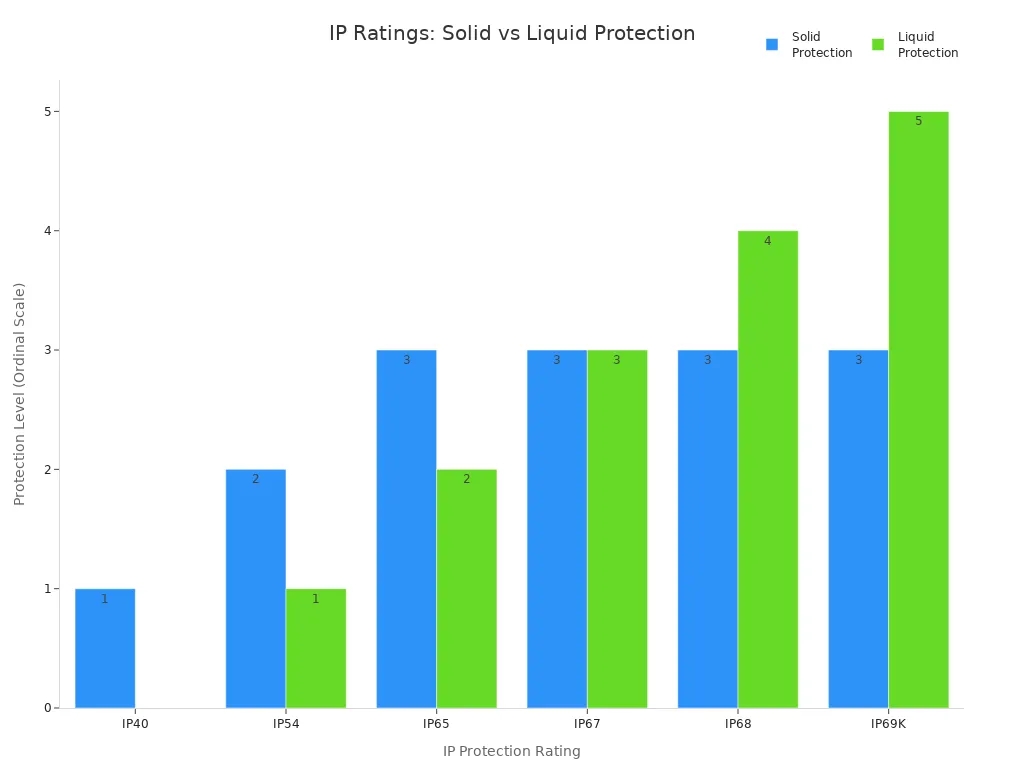
Die Wahl der richtigen IP-Schutzart gewährleistet die Einhaltung der Vorschriften und schützt Geräte vor Umwelteinflüssen. Ingenieure müssen den Schutz des Gehäuses an die spezifischen Risiken der jeweiligen Anwendung anpassen. Durch die Berücksichtigung des Eindringens von Feststoffen und Flüssigkeiten erreichen sie zuverlässige Leistung und Langlebigkeit bei der Fertigung von Metallgehäusen.
Die Wahl der richtigen Materialien ist entscheidend für das Erreichen hoher IP-Schutzarten bei kundenspezifischen Gehäusen. Ingenieure entscheiden sich häufig für Metalle wie Aluminium oder Edelstahl für das Gehäuse. Aluminiumgehäuse bieten eine hohe Korrosionsbeständigkeit, insbesondere nach dem Eloxieren oder Pulverbeschichten, und gewährleisten hervorragende Leistung im Außenbereich und in industriellen Umgebungen. Edelstahlgehäuse bieten robusten Schutz, benötigen aber aufgrund ihres Gewichts unter Umständen zusätzliche Verstärkung. Beide Materialien ermöglichen eine präzise Bearbeitung, was zu dichten Abdichtungen und der Einhaltung der erforderlichen IP-Schutzart beiträgt.
Bei der Konstruktion von Systemen zum Schutz vor dem Eindringen von Fremdkörpern ist die Auswahl der Dichtungsmaterialien ebenso wichtig. Häufig verwendete Materialien sind:
Silikon und Fluorsilikon
Silikonschwamm und -schaum
Vollsilikonplatte und Gummi
Silikonelastomere
gewebeverstärkte Materialien
Platinvernetztes Silikon und hochkonsistenter Gummi
Silikon in Weltraumqualität
Formmassen und flüssiger Silikonkautschuk
Leitfähige Elastomere und EMI-Dichtungsmaterialien
Elektrisch leitfähiger Schaumstoff
ESD-Schutzmaterialien
PORON und Wärmeleitmaterialien
Fluorelastomer (FKM)-Materialien
Geschlossenzelliger Schwamm und Vollgummi
UL-Dichtungsmaterialien
Diese Materialien verhindern das Eindringen von Staub und Wasser in das Gehäuse. Ingenieure müssen bei der Materialauswahl Umgebungsbedingungen, Temperaturbereich und mögliche chemische Belastungen berücksichtigen. Die richtige Kombination aus Gehäusematerialien und Dichtungsmassen gewährleistet, dass das Gehäuse die gewünschten IP-Schutzarten erfüllt und langfristigen Schutz bietet.
Die Geometrie des Gehäuses beeinflusst maßgeblich die Erreichbarkeit und Aufrechterhaltung hoher IP-Schutzarten. Wichtige Konstruktionsprinzipien sind die Minimierung von Nähten und Öffnungen, das Abdichten aller potenziellen Eintrittspunkte sowie die Verwendung überlappender Verbindungen und doppelter Dichtungsmechanismen. Ingenieure konstruieren Gehäuse mit geneigten Oberseiten, um Flüssigkeitsansammlungen zu verhindern. Dadurch wird Wasser von empfindlichen Bereichen weggeleitet, das Kontaminationsrisiko verringert und die Einhaltung von Hygienestandards unterstützt. Frei entwässernde Konstruktionen sind besonders wichtig in Branchen, in denen stehendes Wasser Dichtungen beschädigen oder Bakterienwachstum begünstigen kann.
Eine effektive Gehäusegeometrie berücksichtigt auch Druck und Belüftung. Eine ordnungsgemäße Belüftung verhindert Druckaufbau im Gehäuseinneren, der andernfalls Wasser oder Staub durch die Dichtungen drücken könnte. Ingenieure verwenden häufig abgerundete Ecken und sanfte Übergänge, um Schwachstellen zu minimieren, durch die eindringende Stoffe auftreten könnten. Durch die Berücksichtigung dieser Aspekte stellen sie sicher, dass das Gehäuse seine IP-Schutzart auch unter anspruchsvollen Bedingungen beibehält.
Gängige Schutzarten wie IP 65 und IP 66 erfordern vollständigen Schutz gegen Staub und Strahlwasser. Diese Schutzarten werden häufig durch das Abdichten aller Verbindungen, den Einsatz von Dichtungen an jeder Öffnung und eine Gehäusekonstruktion mit effizientem Wasserablauf erreicht. Bei kundenspezifischen Gehäuseprojekten ist eine sorgfältige Geometrie unerlässlich, da selbst kleine Konstruktionsfehler den Schutz vor eindringendem Wasser beeinträchtigen können.
Dichtungen bilden die erste Verteidigungslinie gegen das Eindringen von Staub und Wasser. Die Wahl des Dichtungsmaterials und dessen Positionierung sind entscheidend für das Erreichen hoher IP-Schutzarten, insbesondere von IP67 oder höher. Empfohlene Materialien sind EPDM, Neopren, Silikon und Polyurethanschaum. Jedes Material bietet einzigartige Eigenschaften:
Material | Eigenschaften |
|---|---|
EPDM | Ausgezeichnete Witterungsbeständigkeit, breiter Temperaturbereich, gute Druckverformungsbeständigkeit |
Neopren | Gute Allzweckleistung, Ölbeständigkeit, moderater Temperaturbereich |
Silikon | Extremer Temperaturbereich, flexibel bei Kälte, geringe Reißfestigkeit |
Polyurethanschaum | Hohe Verdichtung, gut geeignet für unebene Oberflächen, begrenzte UV-Beständigkeit |
Ingenieure müssen durchgehende Dichtungsbahnen ohne Lücken oder Schwachstellen gewährleisten. Die richtige Nuttiefe und -breite ermöglichen die korrekte Kompression, üblicherweise 25–30 % Durchbiegung. Die Dichte und Anordnung der Befestigungselemente beeinflussen die Gleichmäßigkeit der Kompression der Dichtung, was für eine zuverlässige Abdichtung unerlässlich ist. Die Befestigungselemente sollten im Abstand von 7,5–10 cm entlang des Umfangs angeordnet werden. Das korrekte Drehmoment ist entscheidend – zu geringes Drehmoment führt zu Undichtigkeiten, zu hohes Drehmoment kann die Dichtung beschädigen.
Einteilige Dichtungen vereinfachen die Montage und minimieren Leckagequellen. Mehrteilige Dichtungen bieten Flexibilität, können aber Abdichtungsprobleme mit sich bringen. Eine sorgfältige Dichtungskonstruktion, einschließlich Materialauswahl und Geometrie, gewährleistet eine effektive Abdichtung gegen Feuchtigkeit und Staub. Ingenieure müssen zudem Langzeit- und Dauertests durchführen, um die dauerhafte Wirksamkeit der Dichtungen sicherzustellen.
Die Konstruktion von Schutzvorrichtungen gegen Eindringen und Eindringen erfordert die sorgfältige Berücksichtigung jedes Details, von der Materialauswahl über die Gehäusegeometrie bis hin zu den Dichtungsmethoden. Durch die Befolgung dieser Schritte und die Nutzung von … Komplettlösungen für BlechbearbeitungIngenieure können kundenspezifische Gehäuse entwickeln, die die erforderlichen IP-Schutzarten erfüllen oder übertreffen und zuverlässigen Schutz in anspruchsvollen Umgebungen bieten.
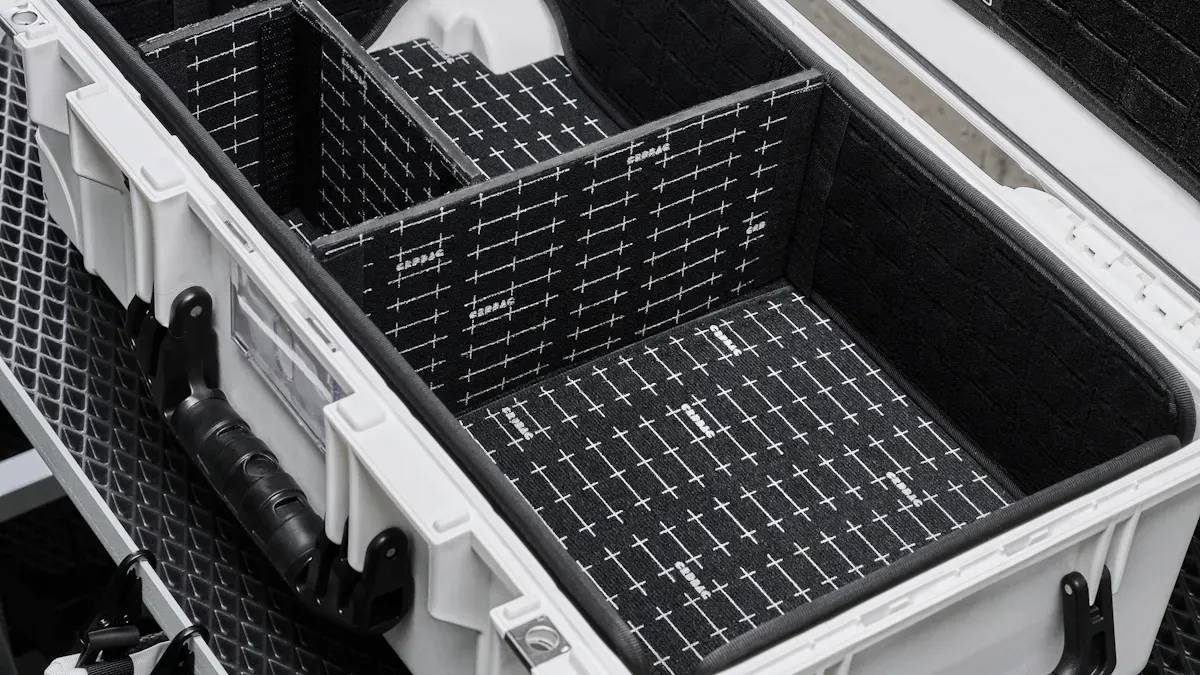
Hersteller befolgen strenge Best Practices, um für jedes Blechgehäuse einheitliche IP-Schutzarten zu gewährleisten. Sie definieren Anwendungsanforderungen und Konformitätsstandards vor Produktionsbeginn. Ingenieure wählen Materialien aus, die den Schutzstandards entsprechen und die strukturelle Integrität für ein optimales Wärmemanagement sicherstellen. Sie gewährleisten die Einhaltung der IP-Schutzarten gegen Staub und Wasser, indem sie Gehäuse mit ausreichendem Abstand zwischen Elektronik und Gehäusewänden konstruieren. Zudem berücksichtigen sie die EMI-Abschirmung, um empfindliche Elektronik vor Störungen zu schützen.
Qualitätskontrollmaßnahmen spielen eine entscheidende Rolle für die Einhaltung der IP-Schutzart. Teams prüfen Dichtungen und Befestigungselemente während der Montage. Sie gewährleisten einheitliche Fertigungsprozesse, um häufige Fehler zu vermeiden. Beispielsweise kann die Nichtbeachtung von Steckverbindertoleranzen oder die Vernachlässigung der Anforderungen an den Kabelbiegeradius die Schutzwirkung beeinträchtigen. Belüftungsöffnungen in der Nähe von wassergefährdeten Bereichen oder zu dicke Befestigungselemente können zu Einfallstellen führen und die Wirksamkeit des Gehäuses verringern. Hersteller achten auf ausreichenden Abstand zwischen Elektronik und Gehäusewänden, um einen optimalen Schutz zu gewährleisten.
Wichtigste Designanforderungen | Häufige Fehler |
|---|---|
Anwendungsanforderungen und Compliance-Standards definieren | Vernachlässigung der Steckverbindertoleranzen |
Wählen Sie geeignete Materialien auf der Grundlage der Schutznormen aus. | Vernachlässigung der Anforderungen an den Kabelbiegeradius |
Sicherstellung der strukturellen Integrität für das Wärmemanagement | Anbringen von Belüftungslöchern in der Nähe von wasserbelasteten Bereichen |
Beachten Sie die IP-Schutzarten für Staub- und Wasserdichtheit. | Unzureichender Abstand zwischen Leiterplatte und Gehäusewänden |
Erwägen Sie die EMI-Abschirmung in Metallgehäusen. | Zu dicke Erhebungen verursachen Einfallstellen |
Tipp: Eine konsequente Qualitätskontrolle während der Fertigung gewährleistet, dass jedes Blechgehäuse die erforderlichen IP-Schutzarten erfüllt und einen zuverlässigen Schutz für die Elektronik bietet.
Prüfungen und Validierungen bestätigen, dass die Gehäusekonstruktionen aus Blech die spezifizierten IP-Schutzarten erfüllen. Ingenieure führen Prüfungen zum Schutz vor Eindringen von Staub und Wasser durch. Dabei verwenden sie spezielle Geräte und Methoden, um reale Bedingungen zu simulieren.
Staubdichtigkeitsprüfung: Ingenieure platzieren Gehäuse in Kammern mit zirkulierenden Staubpartikeln. Mithilfe eines Vakuums simulieren sie Druckänderungen. Das Gehäuse muss staubfrei bleiben, um die Prüfung zu bestehen.
Tauchtest: Die Teams tauchen das Blechgehäuse für mindestens 30 Minuten in Wasser einer festgelegten Tiefe. Während und nach dem Test darf kein Wasser in das Gehäuse eindringen.
Prüfung der äußeren Eisbildung: Diese Prüfung beurteilt die Integrität des Gehäuses bei Eisbildung an seiner Oberfläche. Das Gehäuse muss auch unter Frostbedingungen funktionsfähig und unbeschädigt bleiben.
Prüf- und Zertifizierungsverfahren gewährleisten, dass das Gehäuse die erforderlichen Schutzarten erfüllt. Ingenieure dokumentieren die Ergebnisse und überprüfen die Leistung, um die Einhaltung der Vorschriften sicherzustellen. Sie wiederholen die Schutzartprüfungen für jede Charge von Gehäusen, um eine gleichbleibende Qualität zu gewährleisten.
Hinweis: Tests und Validierungen sind unerlässlich, um zuverlässige IP-Schutzarten für Gehäuse aus Blech zu erreichen. Diese Tests schützen die Elektronik vor Staub, Wasser und Umwelteinflüssen.
Zertifizierung und Dokumentation belegen die Einhaltung der IP-Schutzart für kundenspezifische Blechgehäuse. Akkreditierte Labore stellen nach erfolgreicher Prüfung IP-Prüfberichte aus. Ingenieure erfassen mechanische Prüfdaten und Inspektionsprotokolle, um die Zertifizierungsansprüche zu untermauern.
IP-Prüfberichte von akkreditierten Laboren
Mechanische Prüfdaten
Inspektionsberichte
Zertifizierungen durch Dritte erhöhen die Glaubwürdigkeit von IP-Schutzarten. Organisationen übernehmen die Zertifizierung und gewährleisten, dass das Blechgehäuse auch unter anspruchsvollen Bedingungen die erforderliche Leistung erbringt. Die Erfüllung und Dokumentation der IP-Konformität ist eine gängige Anforderung von Kunden und Aufsichtsbehörden.
Hinweis: Eine ordnungsgemäße Zertifizierung und Dokumentation hilft Herstellern nachzuweisen, dass ihre Blechgehäuse die IP-Schutzarten erfüllen und einen zuverlässigen Schutz für Elektronik bieten.
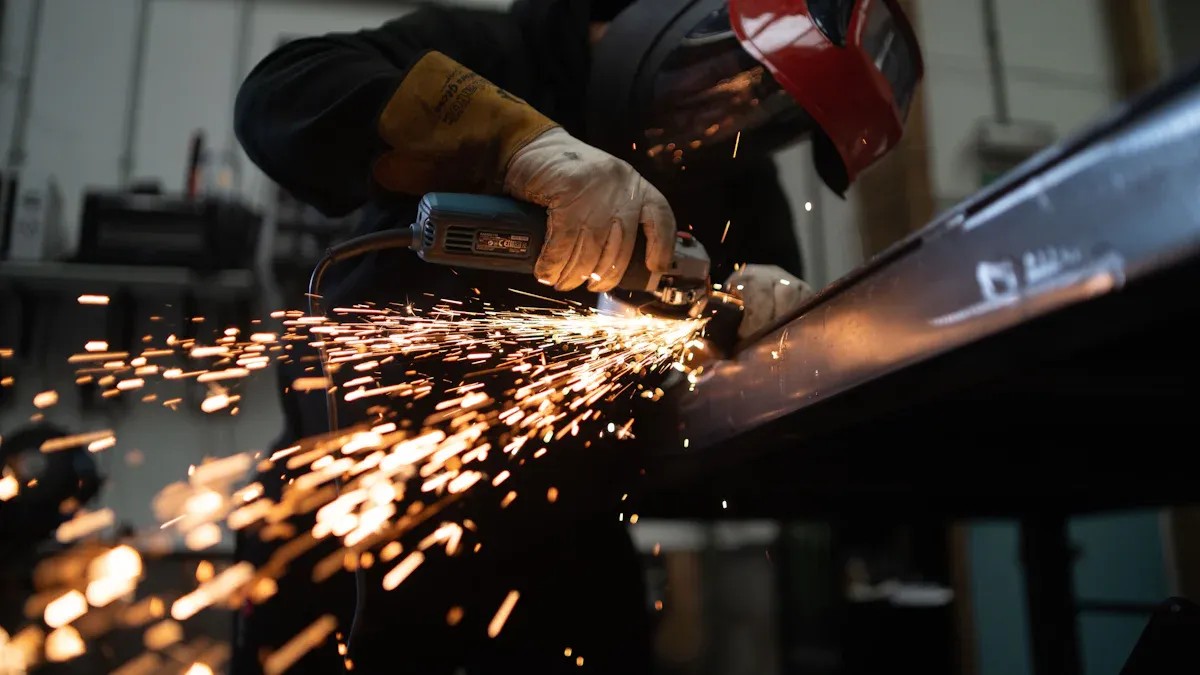
Designteams vernachlässigen mitunter wichtige Aspekte der Abdichtung und des Schutzes vor dem Eindringen von Fremdkörpern. Frühe Designprüfungen helfen, diese Probleme zu vermeiden, indem die Abdichtung von Anfang an als zentrales Element berücksichtigt wird. Ingenieure bewerten bereits in der Anfangsphase Dichtungsmaterialien, Verbindungsdesigns und das gesamte Abdichtungssystem. Dieser proaktive Ansatz ermöglicht es ihnen, potenzielle Probleme zu erkennen, bevor sie zu kostspieligen Fehlern führen. Indem Teams den Schutz vor dem Eindringen von Fremdkörpern frühzeitig berücksichtigen, stellen sie sicher, dass das Gehäuse die erforderliche IP-Schutzart erfüllt und vermeiden Änderungen in letzter Minute, die die Leistung beeinträchtigen könnten.
Fertigungsfehler beeinträchtigen häufig die IP-Konformität. Zu den häufigsten Fehlern zählen Probleme mit dem Befestigungsabstand, unklare Drehmomentvorgaben und Verformungen durch unsachgemäßes Anziehen der Schrauben. Auch falsch ausgerichtete Dichtungsnuten, ungleichmäßiges Anzugsmoment und minderwertige Dichtungen, die mit der Zeit aushärten oder schrumpfen, gefährden die Gehäuseintegrität. Unsaubere Bearbeitung oder Grate können den vollständigen Dichtungskontakt verhindern, während eine unzureichende Abdichtung um Kabeleinführungen, Knöpfe oder Schraubenlöcher Schwachstellen entstehen lässt. Unzureichende Kompression der Dichtungen lässt Wasser eindringen, während zu starke Kompression zu dauerhaften Verformungen oder Spalten führt. Konstruktionsfehler an Ecken können dazu führen, dass sich Dichtungen zusammenziehen oder dünn werden.
Betriebe, die umfassende Automatisierungsstrategien implementieren, verzeichnen weniger manuelle Fehler. Die Automatisierung ermöglicht eine konsistente Ausführung, Echtzeitüberwachung und intelligente Alarmierung. Prozesssteuerungen spielen eine Schlüsselrolle bei der Reduzierung von Fertigungsfehlern. Die folgende Tabelle zeigt zwei Arten von Steuerungen, die in der Fertigung eingesetzt werden:
Art der Steuerung | Beschreibung |
|---|---|
Verhütung | Durch die Nutzung verifizierter Prozessstandards, bewährter Technologien, Simulationen und standardisierter Arbeitsabläufe wird die Fehlerwahrscheinlichkeit verringert. |
Detektion | Implementierung von Fehlervermeidungsvorrichtungen, Inspektionsvorrichtungen, Alarmen bei instabilen Parametern und visuellen Inspektionen, um sicherzustellen, dass die Produktspezifikationen eingehalten werden. |
Unzureichende Prüfungen sind nach wie vor eine häufige Ursache für das Nichterfüllen der IP-Schutzarten. Teams müssen gründliche Prüfungen des Schutzes vor Eindringen von Staub und Wasser durchführen, um die Beständigkeit gegen Staub und Wasser zu gewährleisten. Ohne ordnungsgemäße Prüfungen halten Gehäuse den realen Bedingungen möglicherweise nicht stand. Ingenieure dokumentieren die Ergebnisse und überprüfen die Leistung, um sicherzustellen, dass jedes Gehäuse die erforderliche IP-Schutzart erfüllt. Regelmäßige Prüfungen gewährleisten gleichbleibende Qualität und zuverlässigen Schutz für die Elektronik.
Tipp: Frühe Designprüfungen, strenge Fertigungskontrollen und umfassende Tests helfen Teams, häufige Fehler zu vermeiden und eine zuverlässige IP-Konformität zu erreichen.
Erreichen der IP-Zertifizierung durch Kundenspezifische Blechbearbeitung Ein klarer Prozess ist erforderlich. Teams beurteilen die Umgebungsbedingungen, planen die Geräteintegration, berücksichtigen die Zugangsanforderungen, planen zukünftige Erweiterungen und vermeiden häufige Fehler. Sie verstehen die IP-Schutzarten, integrieren diese in die Konstruktion und validieren sie durch Tests. Die Konsultation von Normen und Experten trägt zur IP-Konformität bei. Umweltgeeignetes Zubehör, Einbauhardware und Zugangslösungen unterstützen die Gehäuseintegrität. Die Überprüfung bestehender Prozesse und die Einholung professioneller Beratung verbessern den IP-Schutz und die Produktzuverlässigkeit.
Serviceart | Beschreibung |
|---|---|
Umweltfreundliches Zubehör | Prüf- und Zertifizierungsdienstleistungen für Komponenten, die zur Sicherstellung der Einhaltung von IP-Schutzarten beitragen. |
Zubehör für die Panelmontage | Unerlässlich für den Erhalt der Gehäuseintegrität. |
Zugriffshardware | Entscheidend für die Funktionalität des Gehäuses. |
Die IP-Schutzart gibt an, wie gut ein Metallgehäuse vor Staub und Wasser schützt. Die erste Ziffer beschreibt den Schutz gegen Feststoffe, die zweite den Schutz gegen Flüssigkeiten. Ingenieure nutzen diese Schutzarten, um Gehäuse den jeweiligen Umgebungsbedingungen anzupassen.
Ingenieure verwenden Staubkammern und Wassertauchtests. Sie prüfen das Gehäuse auf Undichtigkeiten oder Staub im Inneren. Diese Tests bestätigen, dass das Gehäuse die erforderliche IP-Schutzart erfüllt.
Die Materialwahl beeinflusst Haltbarkeit und Dichtigkeit. Metalle wie Aluminium und Edelstahl sind korrosionsbeständig. Dichtungsmaterialien wie Silikon oder EPDM halten Staub und Wasser ab. Die richtige Auswahl gewährleistet langfristigen Schutz.
Konstruktionsteams vernachlässigen mitunter Dichtungsdetails. Zu den Fertigungsfehlern zählen beispielsweise falsch ausgerichtete Dichtungen oder ein unzureichendes Anzugsmoment der Befestigungselemente. Unzureichende Tests können Leckagen oder Schwachstellen unentdeckt lassen. Frühe Überprüfungen und strenge Kontrollen helfen, diese Probleme zu vermeiden.
Die Dokumentation belegt, dass ein Gehäuse den IP-Schutzarten entspricht. Ingenieure sammeln Prüfberichte und Inspektionsprotokolle. Zertifizierungen durch akkreditierte Labore schaffen Vertrauen und unterstützen die Einhaltung gesetzlicher Bestimmungen.
 Jetzt ein Angebot anfordern


 IPv6 NETZWERK UNTERSTÜTZT
Eine Nachricht hinterlassen
Scannen zu Wechat :

Scannen zu WhatsApp :

Hi! Click one of our members below to chat on

 English
 Français
 Deutsch
 Русский
 Italiano
 Español
 Nederland
 日语
日语 한국어
한국어 Svenska